Developer IllFonic is releasing a new update for Friday the 13th. The patch is rolling out today, January 30, on PS4, Xbox One, and PC, and it introduces several new pieces of content to the multiplayer survival-horror game, including a new Jason, map, and more.
With today’s update, IllFonic is adding the Pinehurst map and Jason V from the fifth Friday the 13th film, A New Beginning. Both will be playable in multiplayer and offline with bots. Jason V will be available immediately to all players and can use the following three grab kills: Hedge Trimmer, Last Breath, and You’re So Vein. IllFonic has also added a new grab kill, Rugby Player, which can be unlocked at level 108 for 2500 CP.
In addition to the new map and Jason, IllFonic has made an assortment of bug fixes and gameplay adjustments. Most notably, the developer has reduced the number of Pocket Knives and Medical Sprays that will spawn during a match. Jason players also now begin the match with two more throwing knives, and Jason’s speed and grab range have both been “slightly increased.”
You can find the full patch notes for the latest Friday the 13th update, courtesy of the game’s official forums, below. IllFonic has been rolling our regular updates for the title since it launched; in last month’s patch, the developer introduced the ability to play Friday the 13th offline with AI bots. You can read more about the title in GameSpot’s Friday the 13th review.
Friday the 13th Patch Notes
Jason Part 5 and Pinehurst
Jason Part 5 and the Pinehurst map are both now available for both Multiplayer and Offline Bots!
Part 5 has no level requirement and has access to the following grab kills:
Hedge Trimmer
Last Breath
You’re so Vein
New Unlockable Grab Kill
The grab kill Rugby Player is now available!
The requirements to unlock Rugby Player are:
Level: 108
Cost: 2500 CP
Changes and Bug Fixes
General
Reduced the amount of Pocket Knives and Medical Sprays that can spawn per match
Adjusted the amount of available spawns per match for each weapon
Addressed several issues that were causing players to become interaction locked
Fixed a bug that caused Bear Traps to disappear when disarmed by a counselor
Fixed a bug related to the “The Final Chapter” achievement that was causing players to crash
Jason
Jason will now begin each match equipped with 2 additional throwing knives
Jason’s movement speed has been slightly increased
Jason’s grab range and cone has been slightly increased
Players can once again access the bloody skin for Savini Jason
Fixed a bug that allowed Jason’s character model to rotate while knocked down
The grab kills “Free Kick” and “Disarm” will now properly grant Versatile experience
Counselors
Fixed a bug where, if a player interacted with a window in a certain way, the window would break and incorrectly cause damage to the player
Fixed inconsistencies that were appearing in several counselor models
Maps
The Fuse will no longer be able to spawn in the same building as the Phone Box
Addressed several exploit locations on all maps
Made adjustments to several locations that were causing the objectives/repair parts spawns to be inaccessible
Vehicles
Fixed several bugs related to the boat flipping mechanic
Offline Play
Made many improvements and bug fixes to the bot AI in Offline Bots
Restart function added to the pause menu in Offline Bots
Fixed a bug causing the end score screen to incorrectly show badge progression in Offline Bots
Note: Badges can not be obtained through Offline Bots
Matchmaking
Added servers for South America and Australia [PC]
Added region auto-detection [PC]
Sound
Players should once again be able to hear the sound of weapons and items being dropped
The grab kill “Free Kick” will now properly take into account the user’s audio settings
Anthem, the new IP from BioWare, will not be released in 2018 as previously planned. Instead, the Destiny-esque action game will launch in early 2019, EA confirmed today during its quarterly earnings call with investors. For its part, the company claims this is not a delay.
Prior to the call, it shared this with the Wall Street Journal, confirming a recent report from Kotaku that said Anthem had been delayed. Speaking with the WSJ, EA CFO Blake Jorgensen stated this was not actually a delay. However, that appears to be untrue, given the company had previously cited a 2018 release for the game, which is headed to PC, PS4, and Xbox One.
EA didn’t go into great deal about the reasoning behind the delay. Kotaku’s report suggested it was due at least in part to issues with development, though the statement to the WSJ attributes it instead to a desire to release the game during a less crowded period. EA only briefly addressed the subject during this afternoon’s conference call with investors, and it was presented as if this were not a delay. We’ll report back with anything it has to say during the Q&A portion of the call. Its actual earnings report made no mention of the news.
A TV game show based on the 1972 classic video game Pong is in the works.
Variety reports Atari will develop the show, called Million Dollar Pong, with Scott Sternberg, the unscripted veteran producer behind shows like Kid’s Wheel of Fortune, The Gong Show, Hollywood Squares, Catch 21, and more.
The show will be produced by Scott Sternberg Productions, with Jeff Mirkin producing for Atari. A network isn’t attached yet and a release has not been set.
“Pong is a cultural touchpoint for generations of people,” Sternberg said. “It’s not often we get the chance to develop a game show concept around such an iconic brand. I can’t wait to give people the chance to see, experience and play a brand new Pong.”
[UPDATE] EA confirmed to WSJ that Battlefront II shipped 9 million copies during its launch quarter. This is down significantly from the 13 million copies the 2015 Battlefront reboot shipped during its launch quarter. Blake Jorgensen, EA’s CFO, said during an earnings call that Battlefront II underperformed. EA had modeled 10 million shipments for Battlefront II during its first quarter.
Additionally, Jorgensen told WSJ that Battlefront II will re-introduce microtransactions “in the next few months.” EA removed microtransactions from Battlefront II just before the game’s public release in the wake of significant blowback from the community.
More details from EA’s latest earnings report follow below.
For the quarter, EA reported revenue of $1.16 billion, compared to $1.15 billion. EA posted a loss of $186 million during the quarter, which is much worse than the $1 million loss it took during the same period last year. Importantly, EA mentioned that it incurred a $176 million tax expense during the quarter related to the recently adopted Tax Cuts and Jobs Act.
There were some financial bright spots during the quarter for EA, including the fact that digital revenue, which is higher margin, is taking a bigger share. For this latest quarter, digital revenue was $780 million, compared to $380 million for packaged goods. For the same period last year, digital revenue was $685 million, compared to $464 for packaged sales.
Here are some other takeaways from the EA report:
The “FIFA community” on console alone rose to 42 million players.
FIFA Mobile added 26 million players in the quarter alone.
FIFA Ultimate Team’s player base jumped by 12 percent year over year.
Battlefield 1 now has 25 million unique players since it launched.
The Sims 4’s player base grew by 35 percent compared to last year.
Ahead of its February 16 release, select filmmakers and actors were treated to an advanced screening of Disney and Marvel Studios’ Black Panther. Those in attendance shared their reactions on social media, and the consensus is clear: Black Panther is another hit for the MCU.
Ant-Man director Peyton Reed and Guardians of the Galaxy director James Gunn both praised the film, with Reed calling it “beautiful, soulful, thoughtful and of the moment.”
Taliban fighters, whom US-led forces spent billions of dollars trying to defeat, are now openly active in 70% of Afghanistan, a BBC study has found.
Months of research across the country show how areas the Taliban threaten or control have surged since foreign combat troops left in 2014.
The Afghan government played down the report, saying it controls most areas.
But recent attacks claimed by Taliban and Islamic State militants have killed scores in Kabul and elsewhere.
Afghan officials and US President Donald Trump responded by ruling out any talks with the Taliban. Last year Mr Trump announced the US military would stay in the country indefinitely.
How was the research carried out?
The BBC investigation – conducted during late 2017 – provides a rare snapshot of the security situation in every Afghan district between 23 August and 21 November.
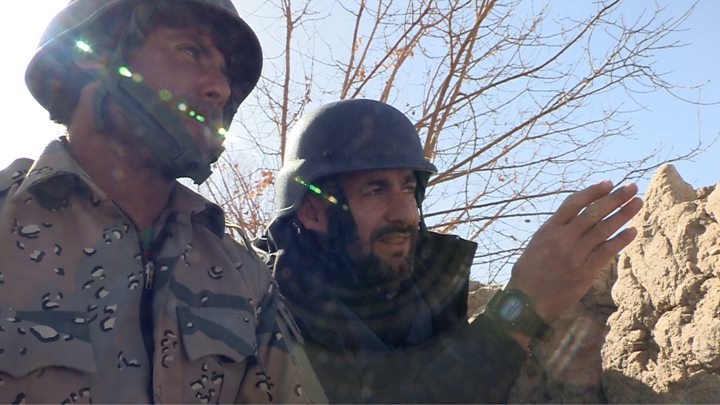
A network of BBC reporters across Afghanistan spoke to more than 1,200 individual local sources, in every one of the country’s 399 districts, to build up a comprehensive picture of all militant attacks over that period.
These conversations happened either in person or by telephone and all information was checked with at least two and often as many as six other sources. In some cases BBC reporters even went to local bus stations to find people travelling in from remote and inaccessible districts in order to double check the situation there.
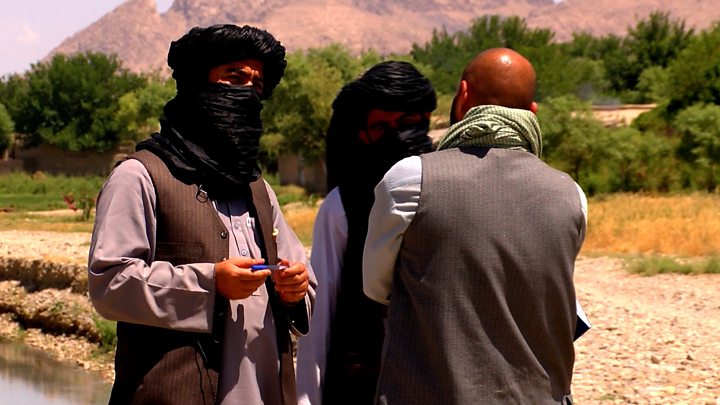
The results show that about 15 million people – half the population – are living in areas that are either controlled by the Taliban or where the Taliban are openly present and regularly mount attacks.
The extent to which they have pushed beyond their traditional southern stronghold into eastern, western and northern parts of the country is clearly visible. Areas that have fallen to the Taliban since 2014 include places in Helmand province like Sangin, Musa Qala and Nad-e Ali, which foreign forces fought and died to bring under government control after US-led troops had driven the Taliban from power in 2001. More than 450 British troops died in Helmand between 2001 and 2014.
“When I leave home, I’m uncertain whether I will come back alive,” said one man, Sardar, in Shindand, a western district that suffers weekly attacks. “Explosions, terror and the Taliban are part of our daily life.”
The BBC research also suggests that IS is more active in Afghanistan than ever before, although it remains far less powerful than the Taliban.
How much territory do the Taliban control?
Gathering accurate and reliable data on the conflict has been getting harder since foreign combat troops pulled out and handed responsibility for security to Afghan forces.
Previous assessments of Taliban strength have not always had access to information from every district of the country, and have often carried the caveat they may have underestimated the real situation.
The BBC study shows the Taliban are now in full control of 14 districts (that’s 4% of the country) and have an active and open physical presence in a further 263 (66%), significantly higher than previous estimates of Taliban strength.
In the areas defined as having an active and open Taliban presence, the militants conduct frequent attacks against Afghan government positions. These range from large organised group strikes on military bases to sporadic single attacks and ambushes against military convoys and police checkpoints.
Media playback is unsupported on your device
Attacks registered during the research period happened with varying degrees of frequency – from once in three months (low Taliban presence) to twice a week (high Taliban presence).
For the purposes of the investigation, districts controlled or held by the government are defined as having sitting representation from Kabul in the form of a district chief, police chief and courts.
Amruddin, who runs a local transport company, lives close to the front line in Baharak district in northern Badakhshan province, where the BBC monitored violence suggesting a medium Taliban presence.
“We live with constant fear. Whenever the government side starts fighting with the Taliban, we’re caught in the crossfire, bringing life to a standstill. It’s quiet at the moment but the Taliban are still here.”
In Taliban-controlled Sangin, father of eight Mohammad Reza, described life as “better” under the militants because there was peace.
“It only got violent when the government forces arrived.”
During the research period, the BBC study found 122 districts (just over 30% of the country) did not have an open Taliban presence. These areas are ranked as under government control, but that does not mean they were free of violence.
Kabul and other major cities, for example, suffered major attacks – launched from adjacent areas, or by sleeper cells – during the research period, as well as before and after.
“People have no choice but to leave their homes, farms and orchards or stay and live with Taliban rule,” Mahgul, a teacher from a northern district in Kabul province, told the BBC.
She said her family fled their village in October. They went to seek refuge in the government-controlled district centre, only for her brother to be killed there two days later by a suicide bomber.
To the west of the capital, Jamila, a mother of five, said: “Two Taliban rockets landed in our back garden last month. We live just a few hundred metres from the district chief office. It’s not safe here.”
During the investigation, evidence of a hike in Taliban taxation across the country was also uncovered. In districts where they are openly present, the militants force farmers, local businesses and even commercial goods convoys to pay them tax while still leaving it to the government to foot the bill for basic services such as schools and hospitals.
“They are charging people for the electricity that we supply!” one chief of a southern district reported.
Co-Director Kate Clark said: “Such a well-researched investigation into the Afghan war is rare and very welcome. The findings are shocking, but unfortunately not surprising – they ring true as an accurate mapping of the extent of the conflict.
“But it is disturbing to realise that each bit of orange shading on the map translates into lives lost and damaged.”
Who are the Taliban?
The hardline Islamic Taliban movement swept to power in Afghanistan in 1996 after the civil war which followed the Soviet-Afghan war, and were ousted by the US-led invasion five years later
In power, they imposed a brutal version of Sharia law, such as public executions and amputations, and banned women from public life
Men had to grow beards and women to wear the all-covering burka; television, music and cinema were banned
They sheltered al-Qaeda leaders before and after being ousted – since then they have fought a bloody insurgency which continues today
In 2016, Afghan civilian casualties hit a new high – a rise attributed by the UN largely to the Taliban
How bad is violence in the cities?
Violence has soared since international combat troops left Afghanistan three years ago.
More than 8,500 civilians were killed or injured in the first three-quarters of 2017, according to the UN. Final figures for the year are awaited. The vast majority of Afghans die in insurgent violence but civilians often suffer as the military, with US backing, fights back, both on the ground and from the air.
Although much of the violence goes unreported, big attacks in the cities tend to make the headlines. Such attacks are occurring with greater frequency and the Afghan security forces appear unable to stop them.
During the research period, gunmen stormed the headquarters of Kabul’s Shamshad TV, leaving one staff member dead and 20 wounded. IS said it carried out the attack. There were other attacks in Kandahar, Herat and Jalalabad.
In the last 10 days of January three attacks left the capital reeling, with more than 130 people dead. Last May, Kabul experienced the deadliest single militant attack since 2001.
At least 150 people were killed and more than 300 injured when a massive truck bomb was detonated in what was supposed to be the safest part of the city. No group has said it carried out the attack.
The rising toll of violence has left the capital’s residents feeling increasingly vulnerable.
Will I make it back home today?
Karim Haidari, BBC Afghan, Kabul
I haven’t been sleeping well this week. It happens every time another tragedy hits our city. “You look old, Dad,” says my seven-year-old bouncing into my bedroom to remind me it’s his birthday. As if I would forget. I laugh and get up.
As I leave the house I pause to look back at my family having breakfast. Will I make it back home today? Will this be the last time I see them? We all think like this in Kabul now.
My BBC colleagues are waiting in the car. We swap news about the latest attack. One of them, a mother of two young children, starts sobbing. “Sometimes I just wish I could blow myself up to end all this. But I don’t want to hurt anyone else.”
We can get you counselling if it would help, I say. But she’s not listening. The driver switches on the radio, to try to change the mood. A pop song comes on with nonsensical lyrics. It’s just another day in Kabul. Just another day of hoping we’ll all stay alive.
How strong is the Islamic State group?
While Islamic State has shown they can hit targets in places like Kabul, they are largely confined to a relatively small stronghold on the border with Pakistan in the eastern province of Nangarhar.
During the research period at least 50 people were assassinated in the provincial capital, Jalalabad. Some of the victims were shot dead and others blown up. Three were beheaded, a hallmark of killings by IS.
“My uncle was assassinated on his doorstep,” said businessman Mashriqiwal. “He was a city security official. I had to leave Jalalabad. My home is still there but it is just too dangerous to live in and go out in public.”
Local people and officials the BBC spoke to said IS now has a presence in 30 districts – not just in the east but also in places like Khanabad and Kohistanat in the north.
The group is fighting both the Afghan military and the Taliban for territorial control.
During 2017 the number of attacks attributed to the group increased, with many targeting urban centres and often Shia Muslims in sectarian attacks almost never seen before in Afghanistan’s 40-year conflict.
IS does not fully control any district at present. However the group has seized parts of the northern district of Darzab, displacing hundreds of people from their homes.
How much territory does the government say it controls?
Presented with the BBC’s findings, President Ashraf Ghani’s spokesman Shah Hussain Murtazavi said: “In some districts areas may change hands. But if you look at the situation this year [2017/18] the activities of the Taliban and IS have been considerably curtailed.
“The Afghan security forces have won the war in the villages. It is no longer possible for the militants to take control of a province, a major district or a highway. There’s no doubt that they have changed the nature of the war and are launching attacks on Kabul, targeting mosques and bazaars.”
He added: “My understanding is that the BBC report is influenced by conversations with people who may have experienced some kind of incident maybe for an hour in one day. But the activities and services provided by our local administrations across the districts show that the government is in control in the absolute majority of districts – except for a handful where the Taliban are present.”
However, in an acknowledgement of how far security has deteriorated, President Trump agreed last year to deploy 3,000 more soldiers, taking the size of the US force in Afghanistan to about 14,000.
The subject of militant gains and territorial control is disputed.
Meanwhile, there is no prospect of an end to the conflict and a new generation of Afghans live in the shadow of violence.
“My kids are not safe outside the family home so I don’t let them out,” said Pahlawan, a Kabul carpet seller with 13 children.
“They are basically under house arrest. I have built them a school in my warehouse. Their world is walls and carpets. Although we are in Kabul, it’s like raising them in a jungle.”
Some names have been changed to protect identities.
One of the most intriguing games coming to VR this year is Sprint Vector, a stylish “adrenaline platformer” for Oculus, Vive, and PS4. It was one of the many PSVR titles that Sony showcased during its Paris Games Week pre-show back in November, though at the time, developer Survios had yet to narrow down a release window for the game. Following a recent closed beta, Survios has now announced a release date for Sprint Vector, and it’s coming very soon.
Sprint Vector launches in the first half of February, though its exact release date will vary depending on which VR device you use. The game will be available on Steam, Oculus, and Vive next week, on February 8, while its PS4 release will follow shortly after that, on February 13. Survios hasn’t announced any pricing details yet.
Sprint Vector is a fast-paced, competitive rollerblading game that has players maneuvering through neon-colored obstacle courses. “Sprint Vector sends its intrepid contestants running, jumping, climbing, flinging, drifting, and even flying across crazy interdimensional race courses and challenge maps where your speed and finesse are put to the test,” Survios says in the game’s official Steam description.
Sprint Vector features both single- and multiplayer modes, with eight playable characters and 12 different tracks. It also employs what Survios calls a Fluid Locomotion System, which has players using a variety of movements to control their characters. You can take a look at the game in motion in the trailer at the top of this story.