Former ‘Glee’ Star Mark Salling Dies Awaiting Child Porn Sentencing

Glee” star Mark Salling, who faced sentencing in March on child pornography charges, was found dead Tuesday in Los Angeles, his attorney confirmed to HuffPost. He was 35.

“I can confirm that Mark Salling passed away early this morning,” attorney Michael Procter said in a statement. “Mark was a gentle and loving person, a person of great creativity, who was doing his best to atone for some serious mistakes and errors of judgment. He is survived by his mother and father, and his brother. The Salling family appreciates the support they have been receiving and asks for their privacy to be respected.”

A Los Angeles Police Department spokesperson told HuffPost that authorities responded to a reported death in the 11900 block of Big Tujunga Canyon Road at 8:50 a.m. Tuesday, but wouldn’t identify the person. TMZ, citing unnamed law enforcement officials, was first to report Salling’s death as a suicide. 

Salling, who played Noah “Puck” Puckerman on “Glee,” faced up to seven years in prison after pleading guilty in October to possessing child pornography involving prepubescent minors. A plea deal required him to register as a sex offender, enter a treatment program and pay $50,000 to each victim who requested compensation. He was also forbidden from contacting anyone under 18 without a parent or guardian present, and was barred from going within 100 feet of public parks and schoolyards. 

Salling’s sentencing hearing was set for March 7.  

In December 2015, the actor was arrested on suspicion of possessing images of underage girls, along with two videos, on his personal computer. Authorities found tens of thousands of images depicting children as young as 2, according to court documents. 

Salling also faced legal conflicts over sexual assault accusations. A former girlfriend, Roxanne Gorzela, sued the actor in 2013 for allegedly forcing her into unprotected sex, according to documents obtained first by the New York Daily News and confirmed by People. She also alleged that he pushed her to the ground in an argument over the incident. Salling settled with Gorzela for around $2.7 million in 2015. 

Another woman said the actor forced her into sex in 2012 after she revoked her consent. She contacted police in 2016, but the Los Angeles County District Attorney’s Office declined to file charges, citing insufficient evidence.

Born in Denver on Aug. 17, 1982, Salling found a unique outlet for his lifelong interest in music on “Glee,” a musical comedy series following the members of a high-school glee club that ran for six seasons, concluding in 2015. 

“I’ve been doing the whole music thing my whole life ― piano lessons, writing songs, singing and performing,” Salling told talk-show host Wendy Williams in 2009, explaining how he landed the role of Puck, best friend of quarterback Finn Hudson.

“It’s pretty natural,” Salling added. 

Finn was played by Corey Monteith, who died in 2013 from a mix of alcohol and heroin. 

“Today we lost another Glee cast member,” “Glee” vocal arranger Tim Davis wrote on Twitter, where a debate had brewed over the response to Salling’s death. 

“Let me be clear. Having compassion for Mark Salling in no way minimizes his crimes, nor does it minimize the pain and devastation of the victims of those crimes. I’m just saying stop adding to his family’s pain. This was their son. If you’re without sin, feel free to cast stones,” Davis continued.

His comment was reshared by Jane Lynch, who played antagonistic cheerleading coach Sue Sylvester. Approached  by TMZ, Lynch called the death “tragic.”

“Oh Mark,” wrote Iqbal Theba, who played the show’s Principal Figgins.

If you or someone you know needs help, call 1-800-273-8255 for the National Suicide Prevention Lifeline. You can also text HELLO to 741-741 for free, 24-hour support from the Crisis Text Line. Outside of the U.S., please visit the International Association for Suicide Prevention for a database of resources.

This article has been updated with additional details about Salling’s legal issues.
Uproar Over Atari Founder’s Past Conduct Prompts GDC Organizers To Reexamine His Pioneer Award

The organisers of the Game Developers Choice Awards today announced the recipient for this year’s Pioneer Award, confirming it will go to Atari and Chuck E. Cheese founder Nolan Bushnell. However, GDC has now confirmed that it’s re-examining this nomination in the wake of an outcry regarding Bushnell’s past behaviour and treatment of women.

A spokesperson for GDC organiser UBM confirmed to Glixel that it is evaluating what it plans to do with the Pioneer Award, saying that GDC and its nominating committee did not know about Bushnell’s history when they nominated him. GDC is now going back to look at the nomination “more closely.” Bushnell did not respond to a request for comment when approached by Glixel.

The hashtag #notnolan took off today on Twitter, with game designers and other industry people calling out UBM for giving the award to Nolan and blasting the organisation for being tone deaf about the #MeToo movement.

Brianna Wu, a game designer from Massachusetts currently running for a seat in US Congress, said on Twitter than Bushnell’s nomination is “wildly inappropriate.” Speaking to Glixel, Wu said Bushnell is deserving of the award, but not this year.

“Nolan Bushnell is clearly a deeply important person in video game history,” she said. “He deserves to be honored for a lifetime achievement award without question. But in the year that the #MeToo movement is going on and we’re having a reckoning about what women face in the workplace? It just seems really tone deaf by GDC.”

“We need to understand that supporting this award for him potentially causes real pain among the women who had to endure him and it sends a difficult message to everybody who is currently enduring similar behavior in our industry,” she went on to say. “It tells women who have been exposed to similar situations that their perpetrators can not only get away with that, but [they] will also be recognised for their work, even if their behaviour along the way was unacceptable.”

Game designer Elizabeth Sampat also weighed in, ripping Bushnell for being “well-known industry garbage.” Sampat offered up some suggestions for what to do instead of giving the award to Bushnell.

The GDC Advisory Committee voted to give Bushnell the Pioneer award. Some of the people who sit on the panel include Halo developer Kiki Wolfkill, EA producer Jade Raymond, and Valve’s Doug Lombardi.

In the book The Ultimate History of Video Games: From Pong to Pokemon and Beyond, Bushnell is quoted as saying that Atari, at its start, “seemed more like fraternity parties than business meetings.” Pong designer Al Alcorn shares in the book a story about a hot tub meeting in which Bushnell reportedly tried to get a woman into the tub with him.

“We had a board meeting in his tub,” Alcorn wrote in the book. “Nolan was saying how much money we were going to be worth, all these millions, and I thought to myself, ‘I’ll believe this when I see it.’ Nolan needed some papers and documents so he called his office and said, ‘Have Miss so and so bring them up.’ We were in this tub [when she arrived], so he proceeded to try to get her in the tub during the board meeting.”

An old San Francisco Chronicle report quotes Bushnell as saying, “Some ladies feel comfortable around me, and some don’t. I find the aura of power and money is very intimidating to an awful number of girls.”

A story for Playboy, “Sex, Drugs, And Video Games,” claims that Atari engineers codenamed upcoming games after women. One codename was Darlene, who Bushnell said “was stacked and had the tiniest waist.”

According to GDC organisers, the Pioneer award “honors breakthrough business and game design milestones.” GDC organisers also today announced that Vlambeer co-founder Rami Ismail will take home the Ambassador Award, while Double Fine boss Tim Schafer is getting the Lifetime Achievement award.

The Game Developers Choice Awards take place on March 21 in San Francisco as part of the Game Developers Conference. We will report back with more details on what GDC plans to do with the Pioneer award as more information becomes available.

Got a news tip or want to contact us directly? Email news@gamespot.com

Australian Government Finally Responds to 2016 Aussie Games Industry Report

The Australian Government has finally issued its response to the 2016 Senate Environment and Communications References Committee report on the future of Australia’s video game development industry.

The brief, 14-page response, which is littered with blank pages and white space, addresses the original report’s eight recommendations. Only one was supported “in principle” (a recommendation that the government should facilitate dialogue between the video game industry and other groups that could potentially benefit from the production of so-called ‘serious games’, like health care, education, and other sectors) but the government stressed that “it considers such developments are an initiative for industry to pursue.”

Continue reading…

Trump heralds ‘new American moment’

Media playback is unsupported on your device

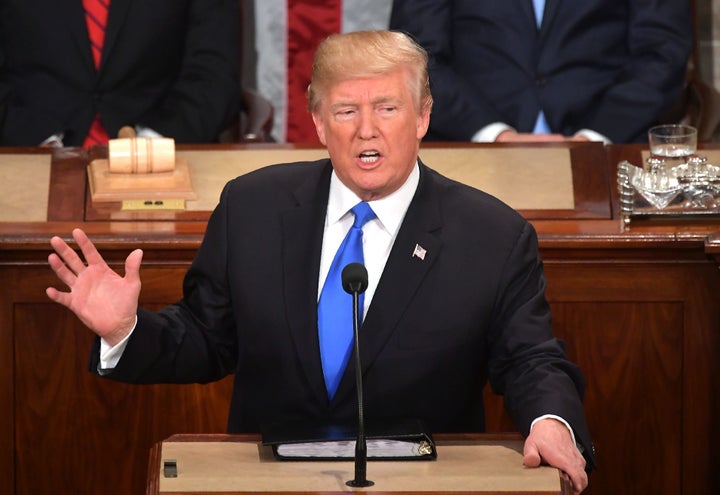
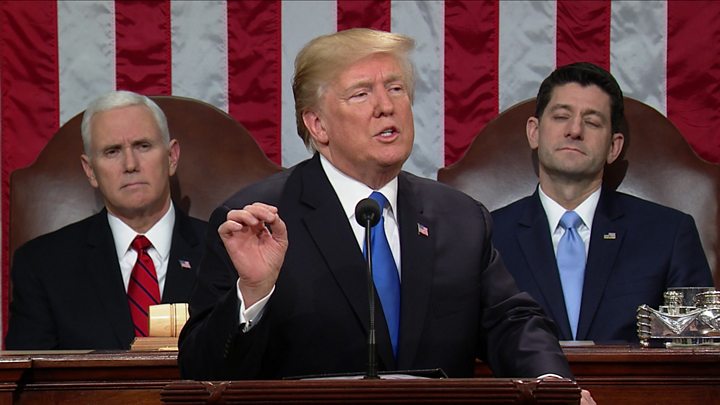
A bullish US President Donald Trump has proclaimed a “new American moment” as he delivered his maiden State of the Union speech to Congress.

In a primetime address, the Republican leader said he is “extending an open hand” to Democrats to work together.

Mr Trump also said he was ordering Guantanamo Bay to be kept open, reversing an Obama-era directive to close the controversial detention camp.

The American economy is booming but Mr Trump’s approval rating languishes.

In an upbeat message a world away from his apocalyptic “American carnage” inaugural speech of just a year ago, Mr Trump said his administration is “building a safe, strong and proud America”.

“There has never been a better time to start living the American dream,” he told lawmakers.

As many as 40 million television viewers were expected to tune in as he implored the nation to come together as “one team, one people and one American family”.

Mr Trump made a plea for the kind of bipartisan co-operation that has been in short supply during a turbulent first year in office.

The president, who has enraged Democrats by withdrawing protections for immigrants who entered the US illegally as children, offered an olive branch.

“Tonight I am extending an open hand to work with members of both parties, Democrats and Republicans, to protect our citizens, of every background, colour and creed.”

Mr Trump again touted his pet plan to rebuild America’s aging roads and other infrastructure, though he did not offer many details.

The president said 2.4 million jobs had been created on his watch.

Since he came to office, the stock market has soared and the unemployment rate is at a 17-year low as the US continues its recovery from the Great Recession of a decade ago.

But Mr Trump has often complained that he does not get enough credit for the rosy outlook.

He had an average job approval last year of 38%, the lowest first-year rating for any president in the history of Gallup polling.

How did Democrats respond?

Massachusetts congressman Joseph Kennedy III, a great-nephew of President John F Kennedy, delivered the Democratic rebuttal.

He attempted to seize Mr Trump’s political mantle by purporting to speak for “Americans who feel forgotten and forsaken”.

Bewailing a “fractured country” and depicting the Trump presidency as “chaos”, Mr Kennedy, 37, said: “Many have spent the past year anxious, angry, afraid.”

“Bullies may land a punch,” he said. “They might leave a mark.

“But they have never, not once, in the history of our United States, managed to match the strength and spirit of a people united in defence of their future.”

In one telling moment from Mr Trump’s speech, members of the Democratic Congressional Black Caucus sat in stony-faced silence amid a standing ovation as the president noted African-American unemployment has hit a record low.

About a dozen Democratic lawmakers said they would boycott Mr Trump’s speech.

One of them, California congresswoman Maxine Waters, told MSNBC: “Why would I take my time to go and sit and listen to a liar?”

Smooth touch, sharp edges

Analysis by Anthony Zurcher, BBC News

You can tell a lot about a State of the Union address by where a president chooses begin. On Tuesday night, Donald Trump delivered a polished speech that started by touting his economic record. Lower unemployment. Restored consumer and business confidence. A higher (at least until today) stock market. Mr Trump’s poll numbers have lagged below the mark one would expect a leader presiding over a prosperous economy. The president, in his speech, set about trying to change that.

When it came to policy, Mr Trump offered some bipartisan suggestions with few details, such as addressing high prescription drug prices, infrastructure investment, job training and prison reform. Where the president lingered, however, were on topics that will prove as divisive as ever. The paeans to patriotism and traditional values will be viewed by Democrats as a rekindling of culture wars. He spoke of religious liberty and standing for the national anthem, and Democrats sat stone-faced.

The president’s pledge to offer an open hand on immigration negotiations was surrounded by extended passages about immigrant crime and a veiled swipe that “Americans are dreamers, too”.

This speech had a softer touch. The language was smooth. The edge, however, was still as sharp.

Read more of Anthony’s analysis of the speech

What did Trump say on foreign policy?

Mr Trump condemned “depraved” North Korea.

He warned that Pyongyang’s “reckless pursuit of nuclear missiles could very soon threaten our homeland.

“We are waging a campaign of maximum pressure to prevent that from happening.”

Mr Trump paid tribute to a disabled defector from the regime, Ji Seong-ho, who fled the country on crutches and was in the audience.

The president also noted that nearly all the territory in Syria and Iraq once controlled by the Islamic State group has been retaken.

“We will continue our fight until ISIS is defeated,” Mr Trump vowed.

While his two White House predecessors have used their State of the Union speeches to forecast victory for American forces in Afghanistan, Mr Trump largely skirted what is now America’s longest war.

In an apparent acknowledgment of the deteriorating security situation there, he said the US “military is no longer undermined by artificial timelines”.

He only mentioned Russia once alongside China as a rival.

Grab Grand Theft Auto 4, Max Payne 3, And Other Rockstar Games Cheap Right Now

If you’ve been looking for something to play on the cheap, the latest Humble Bundle is a great opportunity to get some great PC games for a steep discount. It includes a bunch of fantastic Rockstar titles, and you can get all of them for just $15 total.

As with all Humble Bundles, though, there are different tiers of games. At the cheapest, you can pay $1 or more for Manhunt, Grand Theft Auto: Vice City, Grand Theft Auto III, and Max Payne. If you beat the average ($9.46 at this writing), you’ll also snag Bully: Scholarship Edition, Grand Theft Auto: San Andreas, L.A. Noire, and Max Payne 2. Finally, if you shell out $15, you’ll get L.A. Noire’s DLC, Grand Theft Auto IV, Grand Theft Auto: Episodes From Liberty City, and Max Payne 3.

Also as usual with Humble Bundle, you can decide where you want your money to go. This month’s charity is the Rainforest Alliance, an environmentalist organization working to mitigate biodiversity loss, climate change, and social inequality. Rockstar is donating all of its proceeds to the charity, so you can choose how to split your money between the Rainforest Alliance and Humble Bundle.

This is a great opportunity to check out some classic Rockstar games and see the predecessors of Grand Theft Auto V. And although GTA V isn’t included in it, there are some pretty incredible mods out there that’ll make GTA IV look pretty amazing.

Got a news tip or want to contact us directly? Email news@gamespot.com

Man Strikes Roommate With Zelda Sword And Then A Kitchen Knife, Gets Arrested

An Alaska man hit his roommate with a replica Legend of Zelda Master Sword before later attacking this person with a kitchen knife, police say. According to Anchorage Daily News, 22-year-old Jeremy Tazruk was arrested and charged with fourth-degree assault and reckless endangerment.

Anchorage police arrived on the scene at an apartment near the University of Alaska Anchorage campus to find a “broken television, a bloody napkin, a knife on a table and a bent sword on the floor.” The police then found a person, identified in an official court document as T.P., on a nearby bike trail with a stab wound. This person was taken to the hospital with a puncture wound on the ribs.

Here’s how Anchorage Daily News summed up the fracas (via Kotaku):

“According to Tazruk and witnesses, it said, T.P. started to push a roommate and flipped her onto the armrest of a chair. Another roommate tried to push T.P. away, and T.P. punched that person. When Tazruk and his fiancee, who was holding their baby, stepped in, T.P. punched both of them too.

“Tazruk’s fiancee asked someone to call police. Tazruk grabbed a replica sword from the ‘The Legend of Zelda’ off the wall ‘and tried using its sheath to hit T.P.,’ the document said. After T.P. ran at him, Tazruk hit T.P. multiple times with the sword, according to the court document.”

The document then explains that, with the fight escalating, Tazruk ran into the kitchen and grabbed a knife. After T.P. advanced on Tazruk, Tazruk “struck out at T.P. at least twice, hitting T.P. with the knife.”

According to the document, “The edges of the sword were not sharp, but the tip was sharp.”

Got a news tip or want to contact us directly? Email news@gamespot.com

Trump Pits Dreamers Against American Citizens In State Of The Union

WASHINGTON ― President Donald Trump claimed to be calling for Americans to come together on the issue of immigration in his State of the Union address on Tuesday. 

But he couldn’t resist painting immigration as an “us vs. them” struggle. Them: Immigrants, many of them violent gang members or terrorists. Us: native-born American citizens ― pointedly referred to using the same term often used for undocumented young people who came to the U.S. as children.

“Americans are dreamers too,” Trump said.

He didn’t refer to any foreign nations as “shithole countries in his speech, say Mexican immigrants were rapists, or claim that other countries were sending their ”worst people through a diversity visa lottery. But Trump’s framing of the state of U.S. immigration was as bleak and marked by falsehoods as ever. As he pitched immigration policy changes, Trump stayed on the morbid script he set when he launched his candidacy.

“For decades, open borders have allowed drugs and gangs to pour into our most vulnerable communities,” Trump said. “They have allowed millions of low-wage workers to compete for jobs and wages against the poorest Americans. Most tragically, they have caused the loss of many innocent lives.”

Trump is currently negotiating an immigration deal with Congress to avert a situation he caused: the imminent threat of nearly 700,000 undocumented young people losing deportation relief because he ended the Deferred Action for Childhood Arrivals program, or DACA. He made a fairly dramatic, albeit politically popular, shift when he came out in support for a path to citizenship for about 1.8 million so-called Dreamers, who consider themselves American in every way but on paper. But he’s demanding conditions that could sink a deal. Dreamers can get relief, Trump says, so long as he can more easily deport other undocumented people, build a border wall and slash legal immigration.

In service of those policy changes, Trump highlighted immigrant stories solely in negative terms. He discussed the murder of two teenage girls, whose family members were guests at the speech, allegedly at the hands of MS-13 gang members. He also highlighted an Immigration and Customs Enforcement agent who has worked to arrest members of the gang. Later, Trump mentioned two terror suspects who legally immigrated to the country.

No one denies that bad actors exist within the immigrant population, but there’s no evidence to support Trump’s arguments that immigrants bring in more crime, or that immigrants who enter through the diversity visa lottery or through family-based visas are more likely to be terrorists.

Still, Trump’s policies are based on convincing Americans that both are true. He wants to end the diversity visa lottery, which provides green cards to people from countries with low immigration levels, many of them in Africa ― some of which he reportedly called “shithole countries.” (He denied making that remark.)

Trump also wants to end types of family-based immigrant visas, which he refers to derisively as “chain migration.” The president wants to allow Americans and legal permanent residents to sponsor only spouses and minor children for green cards ― a move that would cut legal immigration dramatically. He claimed that as of now, “a single immigrant can bring in virtually unlimited numbers of distant relatives,” which isn’t true; in reality, U.S. citizens can sponsor only their spouses, children, parents and siblings. These desired changes would most heavily affect Hispanic and black immigrants.

In addition to those legal immigration changes, Trump wants to increase border security efforts, something Democrats broadly support as well. Some even said they were open to giving him his “wall,” which he has already acknowledged is a term for wall, fence or nothing at all.

But Trump made closing “loopholes” another piece of his border security pitch, both in his demands to Congress and in his State of the Union address. The “loopholes,” according to Trump, are policies that ensure unaccompanied immigrant children detained at the border are not deported without getting a chance to state their case for getting relief to stay in the U.S., that kids are not detained indefinitely, and that asylum-seekers are not turned away.

All of Trump’s immigration demands have hit resistance from Congress ― even with Republicans, many of whom disagree with his desire to cut legal immigration levels. With only a week to go until another must-pass government funding bill and a bit over a month until DACA recipients begin losing protections in greater numbers, there’s still no deal in sight.

The president gave ground on one thing, legal status for some Dreamers, and expects massive concessions on multiple facets of immigration in return. Or, as he called it during the speech, “a down-the-middle compromise.”

“For over 30 years, Washington has tried and failed to solve this problem,” Trump said. “This Congress can be the one that finally makes it happen.”

Trump’s immigration remarks got a positive reception from former Ku Klux Klan honcho David Duke. 

They were less well-received by Democratic lawmakers, about 30 of whom brought Dreamers as their guests to the State of the Union.

Joe Kennedy: Trump Is ‘Turning American Life Into A Zero-Sum Game’

In the official Democratic response to President Donald Trump’s State of the Union speech, Rep. Joseph Kennedy III (D-Mass.) denounced the Trump administration’s policies for “turning American life into a zero-sum game” in which the well-being of some Americans must come at the expense of others.

Speaking to an audience in the auto body shop of a vocational high school in Fall River, Massachusetts, the third-term congressman described the proposition Trump has offered the country as one in which “we can guarantee America’s safety if we slash our safety net” and “we can take care of sick kids if we sacrifice Dreamers.”

“As if the mechanic in Pittsburgh and the teacher in Tulsa and the day-care worker in Birmingham are somehow bitter rivals rather than mutual casualties of a system forcefully rigged for those at the top,” Kennedy said.

Democrats offer a more inclusive vision in which one ordinary American’s fortunes do not need to fall in order to make another’s rise, he declared.

“We choose both. We fight for both,” Kennedy said. “Because the strongest, richest, greatest nation in the world shouldn’t leave anyone behind.”

Democratic policies that exemplify those values, according to Kennedy, include a “living wage, paid leave and affordable child care”; a health care system that “offers mercy”; and an “economy strong enough to boast record stock prices and brave enough to admit that top CEOs making 300 times the average worker is not right.”

Switching briefly to Spanish, Kennedy addressed Dreamers, as undocumented immigrants who arrived in the U.S. as children are commonly known.

“You are part of our history. We are going to fight for you, and we are not going away,” he said.

For the millions of Americans whose primary language is Spanish, however, the Democratic Party offered a separate response. Virginia Del. Elizabeth Guzman, a new progressive state lawmaker and immigrant from Peru, delivered a Spanish-language response at the same time as Kennedy on Spanish-language television.

Kennedy, a 37-year-old former prosecutor and grandson of Sen. Robert F. Kennedy (D-N.Y.), who was assassinated in 1968, is frequently discussed as one of the party’s rising stars. He drew particular acclaim for passionate speeches denouncing Republican policies, including an indignant response to the claim by House Speaker Paul Ryan (R-Wis.) that repealing the Affordable Care Act was “an act of mercy.”

In selecting Kennedy to deliver the speech, Democratic congressional leaders tapped someone with mainstream liberal credentials who has stopped short of the most ambitious progressive positions and economic populist rhetoric. Kennedy has not signed on to single-payer health care legislation that has the support of a majority of the House Democratic Caucus, and he opposes the legalization of marijuana.

Kennedy’s speech reflected the Democratic Party’s effort to at once capitalize on Trump’s unpopularity and focus on pocketbook issues that it believes will appeal to a broad array of voters.

By attacking Trump for pitting American workers against one another, Kennedy managed to present a progressive economic message that Democrats might deliver under any Republican president.

Still, he made sure to channel the shock of liberals who believe that Trump is a break from American traditions of civility that has given comfort to white supremacists and other extreme groups.

Listing especially upsetting developments during Trump’s tenure, Kennedy was sure to include “hatred and supremacy proudly marching in our streets” ― a reference to the white supremacist rally in Charlottesville, Virginia, that Trump refused to condemn unequivocally.

Many Americans, he concluded, have “that nagging, sinking feeling, no matter your political beliefs: This is not right. This is not who we are.”

Rainbow Six Siege’s New Operators Teased

Rainbow Six Siege‘s third season of content is kicking off soon with the launch of a big update and the Outbreak event. But Ubisoft already has more in store for Year 3 Season 1, including new Operators. Recently, the company teased some of what you can expect from the game’s next playable characters on PS4, Xbox One, and PC.

The Operators will make up a new Counter-Terrorism Unit–one of the classes of characters in the game. The new CTU will be the Chemical, Biological, Radiological, and Nuclear (CBRN) Threat Unit, specializing in counter-Weapons of Mass Destruction operations.

According to Ubisoft’s blog post, the first Operator “hails from France and uses a drone to maintain quarantine perimeters. Their service record is astounding, but their list of regrets seems endless.” The second Operator, meanwhile, “moved to Russia to pursue their studies and they uncovered a range of applications for self-dissolving nanobots. All allies can benefit from the research carried out by this CBRN Specialist.”

These two Operators will be added to the multiplayer roster and will be playable during the upcoming Outbreak event. Outbreak consists of a new cooperative mode that involves teams of three taking on a town ravaged by an epidemic (it sounds like you’ll be fighting some sort of zombie-like creature). And, of course, there’ll be gear for you to acquire.

Got a news tip or want to contact us directly? Email news@gamespot.com

The Hidden Extremism Of Trump’s State Of The Union

WASHINGTON — President Donald Trump’s first State of the Union address was competently delivered and — for him — relatively inoffensive. The mainstream media and the television pundits will surely deem it to be a presidential moment, representative of yet another pivot to the center.

But one speech does not erase Trump’s record. The speech’s banality — its embrace of optimism and platitude — is a mask. Do not be fooled: Political extremism, divisive rhetoric and bizarre behavior have characterized the first year of Trump’s presidency and underlie many of the harmless-sounding proposals he talked about Tuesday night.

This is the president, recall, who rose to political power on the racist lie that his predecessor was born in Kenya, and he ran for president while calling to ban all Muslims from the country and deriding Mexican immigrants as rapists. He was slow to denounce white nationalists, who have looked to him as a leader and marched openly in the streets of this country. And since last summer, this president has launched an all-out war on the investigations into Russian interference in the 2016 election — a war that continued to rage this week.


 Trump mentioned none of those facts in his State of the Union address. Indeed, the speech was most notable for all of the policies and initiatives of his administration that he downplayed or left out entirely.

On immigration, his signature issue, the president called for compromise on the status of undocumented immigrants who came to the U.S. as children. But he failed to mention that the crisis that has beset these immigrants, known as Dreamers, is one of his own making. Last year, Trump canceled Deferred Action for Childhood Arrivals (DACA), which granted Dreamers renewable two-year deportation protections and work permits. Thousands of them have already lost their protections. Trump also didn’t talk about his unilateral cancellation of protected status for hundreds of thousands of Haitians, Nicaraguans, Salvadorans and Sudanese — people who have lived in the U.S. for years and will now have to leave. And he didn’t mention his three attempts to ban people from Muslim-majority countries from entering the U.S, the third attempt of which is due for a U.S. Supreme Court ruling later this year.

On the economy, Trump bragged about job growth and the Republican tax cut bill, but he didn’t mention that those tax cuts were overwhelmingly tilted toward the wealthy and corporations. He argued that the country is undergoing a “new American moment” under his presidency, promising, “There has never been a better time to start living the American dream.” He talked about bonuses and wage gains, but he certainly didn’t mention that the richest 5 percent of taxpayers would see the largest percentage increase in after-tax income under the law.

On defense, Trump bragged about U.S. success in the war against ISIS. But he didn’t mention that if he gets his way, transgender members of the military won’t be able to serve openly.

On North Korea, Trump described his policy against the hermit kingdom as “waging a campaign of maximum pressure” to prevent Kim Jong Un’s regime from acquiring nuclear weapons. That sounds like a reasonable — even presidential — thing to say. But it obscures the fact that Trump’s actual policy toward North Korea has been erratic and ineffective. Last year, North Korea tested a missile capable of hitting the U.S. mainland. Instead of pushing for nuclear negotiations, the Trump administration is reportedly considering a preemptive strike against North Korea — which nonproliferation experts say would do little to deter the rogue state’s nuclear ambitions and would put millions in South Korea at risk of a retaliatory attack. Hours before Trump’s speech, The Washington Post reported that the Trump administration had dropped Victor Cha, a former White House official, from consideration to become the U.S. ambassador to South Korea because he had warned of the risks of a so-called “bloody nose” attack on North Korea.

On Iran, Trump asked Congress to “address the fundamental flaws in the terrible Iran deal.” Left unsaid was the fact that Washington’s European allies have already said they will not cooperate with an effort to unilaterally rewrite the terms of the Iran deal. The best-case scenario is that the U.S. ends up isolated as Iran, France, Germany, Britain, China and Russia continue abiding by the nuclear deal. The worst-case scenario is that Iran points to a U.S. violation of the agreement as an excuse to scrap the deal entirely and resumes production of weapons-grade nuclear material. And although Trump praised protesters in Iran “who rose up against the crimes of their corrupt dictatorship” and congratulated himself for voicing his support for the movement, he didn’t mention that he has spent months fighting in court to ban Iranians — protesters or otherwise — from entering the U.S. at all.

On nuclear weapons, the president suggested that “someday in the future there will be a magical moment when the countries of the world will get together and eliminate their nuclear weapons.” But privately Trump has expressed a desire for a nearly tenfold increase in the U.S. nuclear arsenal, NBC reported last year. His administration is now pursuing the development of new low-yield nuclear weapons, according to a leaked copy of the Nuclear Posture Review obtained by HuffPost.

On Guantanamo Bay, Trump actually described his policy: an executive order that effectively reverses his predecessor’s commitment to closing the offshore prison. But he managed to avoid threatening to send American citizens to the prison where an ad-hoc judicial system has replaced what most Americans would consider due process. And he made no mention of his past threat to restart a now-defunct torture program.

On social issues, Trump said hardly anything. His administration is no longer standing behind transgender students who want to use the restroom of their choosing, but you wouldn’t know from listening to his speech. He didn’t mention his support for a ban on all abortions after 20 weeks’ gestation or his decision to reinstate the Reagan-era global ban on funding organizations that offer abortion as a family planning option or Republicans’ multiple attempts to defund Planned Parenthood. He touted “faith and family” as the “center of the American life” but faces sexual misconduct allegations from a number of women — and he backed a Senate candidate who had been accused of sexually pursuing teenage girls.

The mood in the chamber ― at least on the GOP side ― resembled a monster truck rally. Republicans said they loved the speech. They enthusiastically cheered the many applause lines. They hooted. They hollered. They chanted “U-S-A,” with Rep. Matt Gaetz (R-Fla.) pumping his fist to the rhythm of the cheer and Rep. Jody Hice (R-Ga.) holding up a red “Make America great again” hat.

But on the Democratic side, many sat when Trump entered the chamber. Many others spent a considerable amount of time on their phones as the speech became the third-longest State of the Union ever delivered, at one hour, 20 minutes and 34 seconds.

Democrats hissed during some of Trump’s claims. One line that will likely stick in memory will be his assertion that “a single immigrant” could bring in “virtually unlimited numbers of distant relatives” through family reunification. And the only reason it will be remembered is because it is so brazenly dishonest in a speech that contained a number of misleading claims, such as the GOP tax cut being the largest of all time. (It’s not.)

Hanging over the whole speech, but never acknowledged, was special counsel Robert Mueller’s investigation into Russia’s interference in the 2016 election and what role Trump and his associates played in any sort of collusion.

Trump mentioned Russia briefly, only once, as a “rival” that challenges U.S. interests. But during the election, Trump’s campaign saw Russia as a potential ally. At campaign events, he repeatedly praised President Vladimir Putin and said he longed for a U.S. president who acted more like the strongman.

The Russia investigation is a constant in the White House. Mueller has already indicted four people connected to Trump, and the probe gets closer and closer to the president and whether he tried to obstruct justice by firing the FBI director. And it continues to shape, and undermine, the other actions Trump takes as president.

Trump said a lot — his speech was one of the longest State of the Union addresses ever. But what he didn’t say tells you everything.

Jenavieve Hatch contributed reporting